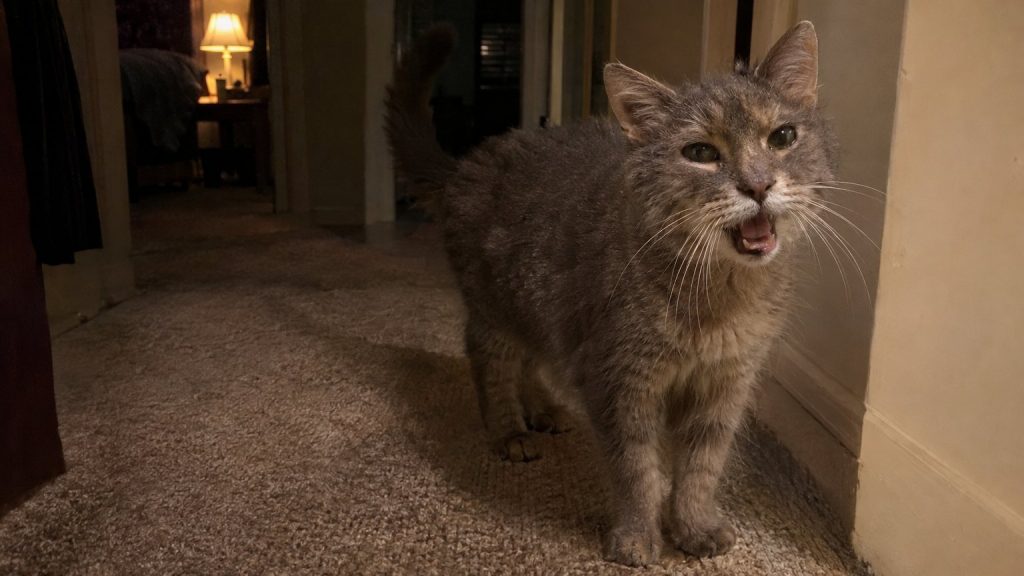
It is dark. The house is silent. Then, from the hallway, one long, loud meow. A pause. Then another.
If your cat has turned into a night-time alarm, you are far from alone, and in most homes the reason is simple. Sometimes it is not, though, so this guide starts with the part that matters most.
First, When Night Meowing Means the Vet
Veterinarian Sandra C. Mitchell, writing for PetMD, says a sudden increase in meowing should always be looked into. Call your vet if:
- the meowing is new, louder, or sounds different from your cat’s usual voice
- your cat seems restless, in distress, or is panting with an open mouth
- you notice weight loss, changes in appetite or thirst, or changes in the litter box
- your male cat is meowing and straining in the litter box. PetMD says this can be a life-threatening urinary blockage, so go straight to a vet
Also trust your gut. If your cat’s night-time voice feels wrong to you, that is reason enough to ask.
The Most Common Reason: Your Cat Is Simply Awake
Cats are crepuscular, which means they are most active around dawn and dusk. Their busiest hours do not line up with our sleep, so a 4 a.m. wake-up call is, sadly, normal cat behavior.
Dr. Mitchell says many cats meow at night because they are bored, frustrated, or want something, usually food or attention. And this is where most of us accidentally make it worse.
Why getting up makes it worse
You stumble out of bed, fill the bowl, and the meowing stops. It works, so it feels like the answer. But your cat has just learned that a loud meow at 3 a.m. gets breakfast. PetMD’s advice is clear: unless it is an emergency, do not get up and give them what they want.
Do not scold or punish them either. That only frightens your cat and harms your bond. Ignoring the meow is hard for a few nights, and it usually gets louder before it gets better, but it is what teaches the habit to fade.
Older Cats Are a Different Story
If your cat is a senior and the night meowing is new, look at it more carefully. PetMD lists several health problems that often show up overnight:
- Hyperthyroidism, common in older cats, which can leave them restless and very vocal
- High blood pressure, which can come with it
- Cognitive dysfunction, an age-related condition similar to dementia, which can cause confused, persistent meowing
- Losing sight or hearing, which makes many cats call out louder and more often
UK insurer Petplan notes that cognitive dysfunction is being seen more often as cats live longer. Many of these conditions can be treated or managed, which is why a vet check is worth it rather than just waiting it out.
Other Reasons Worth Ruling Out
- Hormones. Unspayed females in heat and unneutered males looking for a mate can yowl loudly. This usually stops after spaying or neutering.
- Cats outside. Petplan points out that a cat may yowl at a neighborhood cat in the garden. If yours sits at the window and calls, that may be it.
- A chatty breed. Siamese, Tonkinese, Bengals and Sphynx cats are known talkers, day and night.
- An empty bowl or a dirty litter box. Some cats will tell you about both, loudly.
A Calmer Evening Routine That Helps
- Play hard before bed. Ten or fifteen minutes with a wand toy, ending with a “catch”, uses up that dusk energy.
- Feed the last meal after play, close to your own bedtime. Hunt, eat, sleep is a natural rhythm for cats.
- An automatic feeder can take you out of the breakfast equation, so your cat stops waking you for food.
- Leave water, a clean litter box and a cozy bed easy to reach at night.
- Give it time. Habits built over months take a couple of weeks to change.
If your cat also races around the house at night, our piece on night-time zoomies covers that side of the story.
Most night meowing is a cat being a cat, on a cat’s schedule. A little patience, an evening play session, and a quick vet check when something feels off will get most homes back to quiet nights.