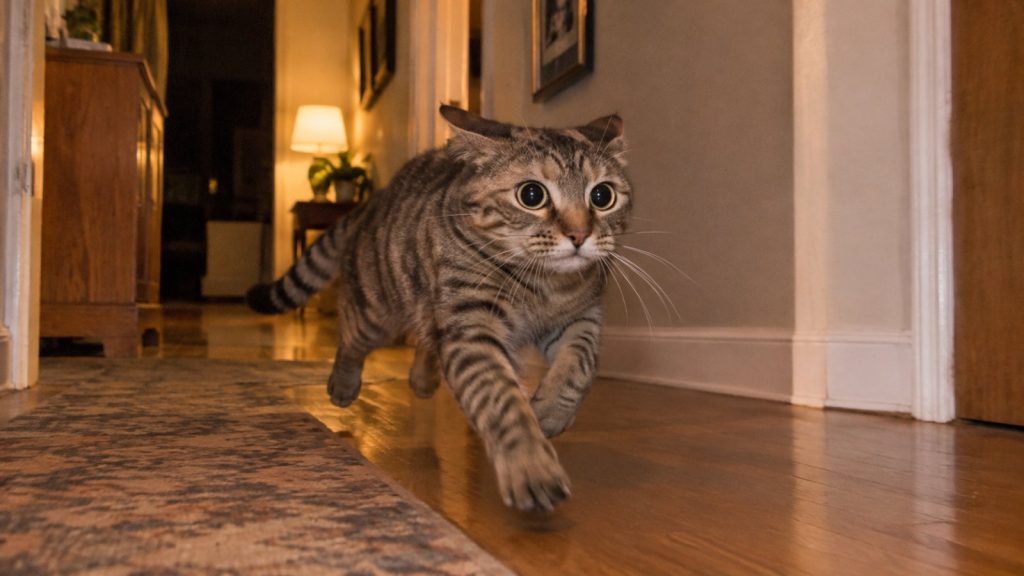
It’s 3 AM. Something thunders down the hallway, skids around a corner, and thunders back. Nothing is chasing your cat. These sudden bursts of speed are known as zoomies, and, as tiring as they are for you, they’re usually a sign of a healthy cat.
Why Night Is Prime Time
Cats aren’t really night animals. They are crepuscular, which means they are most active around dawn and dusk. That’s when mice, insects, and small birds are out in the wild, and as one vet explains in PetsRadar, low light gives a hunting cat the advantage.
Your cat may have dinner served in a bowl, but that instinct is still there. Add a whole day spent dozing while you were out, and by bedtime there’s a lot of energy that needs somewhere to go.
Who Gets Them Most
Kittens and young cats, up to about 18 months, are usually the wildest. They’re curious and full of energy, and if there’s no other cat to wrestle, your toes under the blanket will do.
Most cats calm down as they get older, and senior cats often prefer a warm bed to a midnight sprint. Some stay lively for life, though.
Six Ways To Get Your Nights Back
1. Tire them out during the day
Several short play sessions with toys that act like prey, such as feather wands and balls, can use up a lot of that energy. Our list of the best cat toys has some ideas.
2. Feed a meal right before bed
In the wild, a cat hunts, eats, grooms, and sleeps. Giving your cat their main meal at bedtime works with that pattern, and a full stomach often leads to a long nap.
3. Build a calm bedtime routine
Play first, then a treat or a quiet grooming session, at about the same time each night. Cats like knowing what comes next.
4. Ignore the wake-up calls
This is the hard one. Any reaction, even telling them off, is attention, and attention teaches them that it works. Stay still, and reward them when they’re calm.
5. Give them something to do
Quiet toys, a puzzle feeder, or a window perch can keep a night owl busy without involving you.
6. Check that nothing is wrong
Zoomies are normal, but a sudden change isn’t always. If your cat’s nighttime activity becomes excessive out of the blue, or comes with other unusual behavior, ask your vet to rule out a medical cause. This matters most with older cats.
Be Patient
It can take a few weeks of a steady routine before things change. If your cat stays up anyway, try a separate sleeping area at night, with a bed, water, and a litter box. You’ll sleep better, and your cat will be just as happy racing around somewhere else.