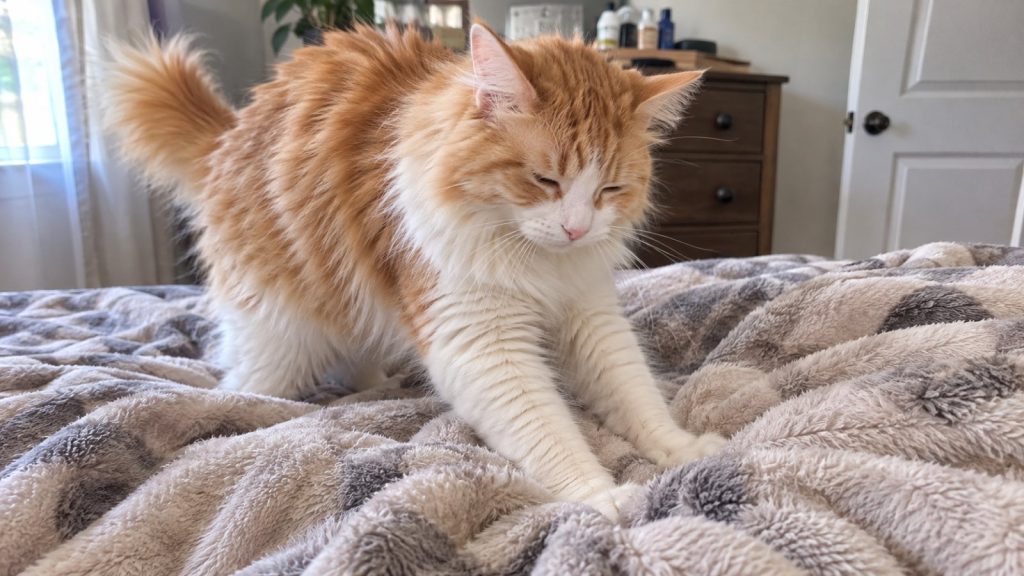
Why do cats knead? Left paw, right paw, left paw, right paw, eyes half closed, sometimes a little drool. Cat people call it making biscuits, and the most likely explanation goes all the way back to a cat’s first weeks of life.
It Probably Starts At Mom
Newborn kittens press their paws rhythmically against their mother’s body while they nurse, which helps the milk flow. Susan Hazel, an animal behavior expert at the University of Adelaide, told Live Science that kneading is most likely a leftover from those days. Nursing, along with the scent around the mother’s belly, was probably very pleasant for a kitten.
It is one of the first things a kitten learns to do. If you’ve ever wondered how much a mother cat shapes those first weeks, our guide to foster mother cats explains what happens at each stage.
Why Adult Cats Keep Doing It
Grown cats don’t need milk, but the feeling seems to stay with them. Laura Watson, a veterinary nurse at International Cat Care, says that cats may knead when they’re with someone they feel safe with, or when they find a very soft blanket or cushion, because the movement is tied to the comfort of nursing.
Some cats even drool or suckle at the fabric while they do it, which supports the idea. So if your cat picks your lap, you can take it as a good sign.
Could It Also Be About Scent?
Possibly. Cats have scent glands in their paw pads, so kneading might leave a little of their smell behind. Experts aren’t sure how much this matters. Scratching a post is a more likely way for a cat to mark something than kneading a cozy blanket.
The honest answer is that nobody knows for certain why cats knead. The nursing explanation is simply the best one we have.
When Kneading Hurts
It’s sweet until the claws come out. You don’t need to stop your cat from doing it, and you shouldn’t punish them for it. A few simple changes usually solve the problem:
- Put a thick blanket or cushion on your lap. It protects your legs and gives your cat something soft to work on.
- Leave that blanket out so your cat can knead it when you aren’t around. It will smell familiar and help them feel safe.
- Keep their claws trimmed. If you aren’t sure how, your vet or groomer can show you.
Is Kneading Ever A Problem?
For most cats, no. It’s normal behavior at any age, and some cats do it far more than others. A cat who never kneads is normal too.
If kneading comes with other changes, like hiding, restlessness, or a change in appetite, mention it to your vet. In that case it’s the other signs that deserve attention, not the kneading.