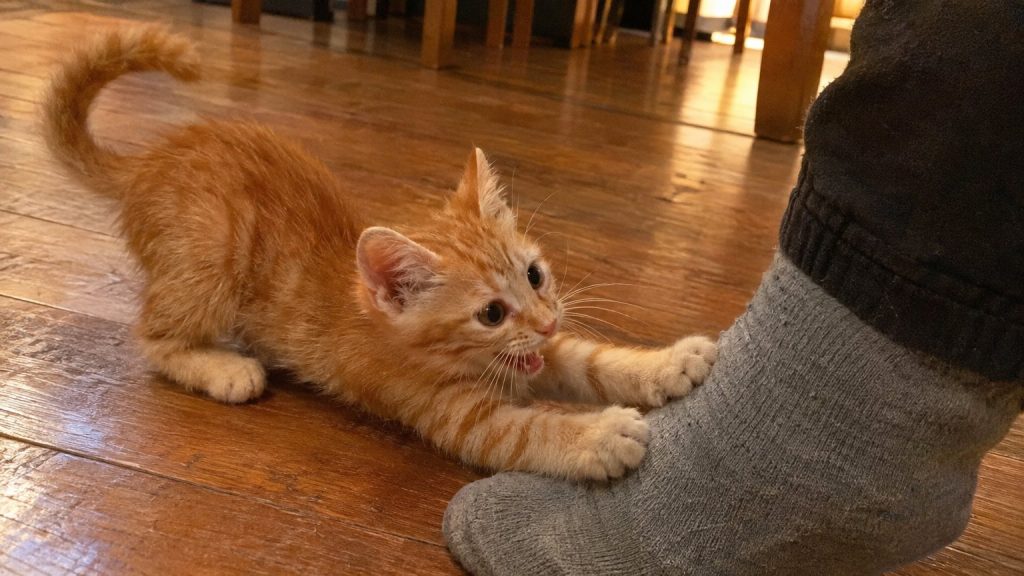
You walk past the sofa, and something launches out from underneath it and wraps itself around your ankle. Or you shift your toes under the blanket at night, and the blanket attacks. Why does my cat attack my feet? In most homes, the answer is play. In a few, it’s a sign that something else is going on, so it’s worth knowing the difference.
Your Feet Look Like Prey
Cats are hunters, and being well fed doesn’t switch that off. Amanda Campion, a clinical animal behaviorist, told PetsRadar that cats may see moving feet as prey, because they’re programmed to treat movement as a call to action.
Feet also happen to be about the right size. Hill’s Pet Nutrition quotes International Cat Care’s point that cats hunt alone, so their natural prey is small. A foot shuffling under a duvet, or a fluffy slipper that looks a bit like a small animal, is very hard for a cat to ignore.
Most Ambushes Are Invitations to Play
A cat who wants to play doesn’t look angry or scared. RSPCA Australia, quoted by Hill’s, describes the classic version: the cat hides behind furniture, waits for someone to walk by, then dashes out and goes for the ankles. Kittens and young cats are the worst offenders, because stalking, pouncing, and bunny kicking are how they play with each other.
When It’s Something Else
Campion lists a few other reasons a cat may go after your feet:
- Boredom. A cat without enough play or things to do may turn your feet into the entertainment.
- Attention. Some cats use a foot attack to say they’re hungry, want to go out, or want you to notice them.
- Fear or stress. A worried cat may react to sudden movement and lash out at the nearest body part, which is often a foot.
- Pain. Conditions like osteoarthritis, dental disease, and hyperthyroidism can make a usually friendly cat act out to avoid being touched or moved.
Play or Aggression?
Play can get a bit rough, but it shouldn’t look hostile. Hill’s lists signs that a cat has moved into aggression: growling, hissing, claws out, an open mouth, a stiff stance, or an arched back. Bites or scratches that break the skin are also a sign things have gone too far. If a bite does break the skin, wash it well and call your doctor, because cat bites can get infected. Our article on why cats lick and then bite covers the warning signs to watch for.
How to Stop the Ankle Ambush
- Don’t make it exciting. Shrieking, shouting, or shaking a cat off can actually reward the behavior, Campion warns. Stay as calm and still as you can.
- Redirect to a toy. The American Animal Hospital Association, quoted by Hill’s, suggests waving a toy in front of a cat who chases feet, so they play with the toy instead.
- Schedule play. A few short sessions a day with toys your cat can stalk, chase, and pounce on use up the energy that would otherwise go into your ankles.
- Give them something to kick. Soft, squishy toys make your feet less interesting by comparison.
- Rethink the slippers. Fuzzy socks and furry slippers are basically prey with a person attached.
Night attacks often go with the 3 AM zoomies, and the same fix applies: a good play session and a meal before bed.
When to Call the Vet
If foot attacks start suddenly in a cat who never did it before, or come with other changes, talk to your vet. Campion says to watch for signs of pain, such as not wanting to be touched, changes in grooming, eating less, being unusually tired, or losing interest in play. Hill’s notes that the American Association of Feline Practitioners advises raising concerns about aggressive behavior with your vet sooner rather than later.
For most cats, though, the ankle ambush is just a small hunter with a lot of energy and a favorite target. Give them a better one, and your feet get some peace.