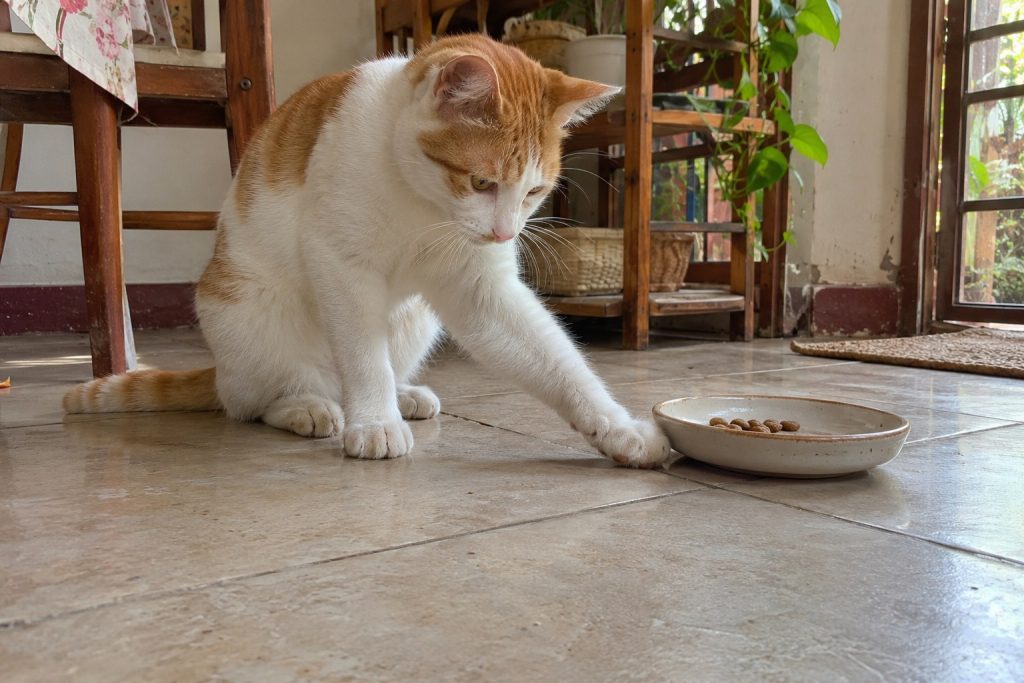
Scrape, scrape, scrape. Your cat eats a few bites, steps back, and starts raking a paw across bare kitchen tile. If a placemat corner is within reach, they might drag it straight over the dish. On smooth hardwood, they make the exact same digging motion with nothing there to move.
So why do cats bury their food on a spotless floor? Cats Protection calls it food caching or food covering. In the wild, covering uneaten prey keeps scavengers from stealing leftovers and stops strong food smells from drawing larger predators. That instinct hangs on even when dinner comes from a can in a safe kitchen.
Because the sweeping motion looks just like scratching in the litter tray, plenty of cat parents joke that their cat is insulting the meal. Usually, it isn’t a review of your taste in cat food. Both habits are about hiding a strong scent. Even when the floor looks spotless to you, it still smells like dinner to your cat.
It’s the same wild wiring behind why cats bring you their “gifts”. Instincts built for handling prey outdoors can look hilarious next to the dishwasher.
Some cats scrape around dry kibble just as earnestly as wet food, or even paw beside an empty dish. Often it’s the leftovers, or simply the lingering smell of the meal, that triggers a few quick sweeps.
Watch what happens right before the scrape
Timing tells you almost everything. If your cat eats a normal meal and then paws at the tile around the last few bites, they’re simply done for now and trying to stash the rest. When the rest of their routine looks normal, a few imaginary scoops of dirt are nothing to worry about.
If they sniff the bowl, scrape the floor, and walk away without taking a bite, look for what changed. Did you open a new flavor or texture? Did the dish get moved into a busy hallway? Is another pet hovering close enough to make them tense? They may genuinely dislike the meal, or feel too exposed to relax and eat.
Watch whether your cat circles back once the kitchen quiets down. A cat can love squeezing into a snug cardboard box hideaway and still want clear sightlines around their dinner bowl, especially if another pet tends to walk up from behind.
Make the feeding spot calmer
If your cat regularly leaves half the bowl behind, try splitting their daily food into smaller, fresher meals. Pick up leftovers once they walk away and wash the bowl, so the next serving goes into a clean dish with no stale crust from breakfast.
In a multi-cat home, feed each cat in their own quiet spot where nobody can crowd them. Moving a bowl out of a high-traffic walkway is an easy first test. If your cat eats more comfortably in the new spot, you’ve solved the mystery.
For a healthy cat who just loves a tidy finish after dinner, a flat, washable silicone mat protects the floor without bunching up into the food.
When scratching points to a real problem
Food covering only becomes a warning sign when your cat stops eating normally. If they keep turning away from a favorite food, act hungry but back off from the bowl, or skip meals altogether, call your vet promptly. The Cornell Feline Health Center’s guide to appetite loss lists dental pain, nausea, and other illnesses among the possible causes, and warns that going without food can start harming an adult cat’s health in as little as 24 hours.
When you call the clinic, jot down roughly how much your cat ate and when they last finished a full meal. With multiple cats, feeding them separately for a day helps you see exactly whose bowl stayed full. That information helps your vet far more than whatever happened to the placemat.
Sources
- Cats Protection, Why do cats try to cover their food?, Cats Protection Blog, 2025.
- Cornell Feline Health Center, Anorexia, Cornell University College of Veterinary Medicine.