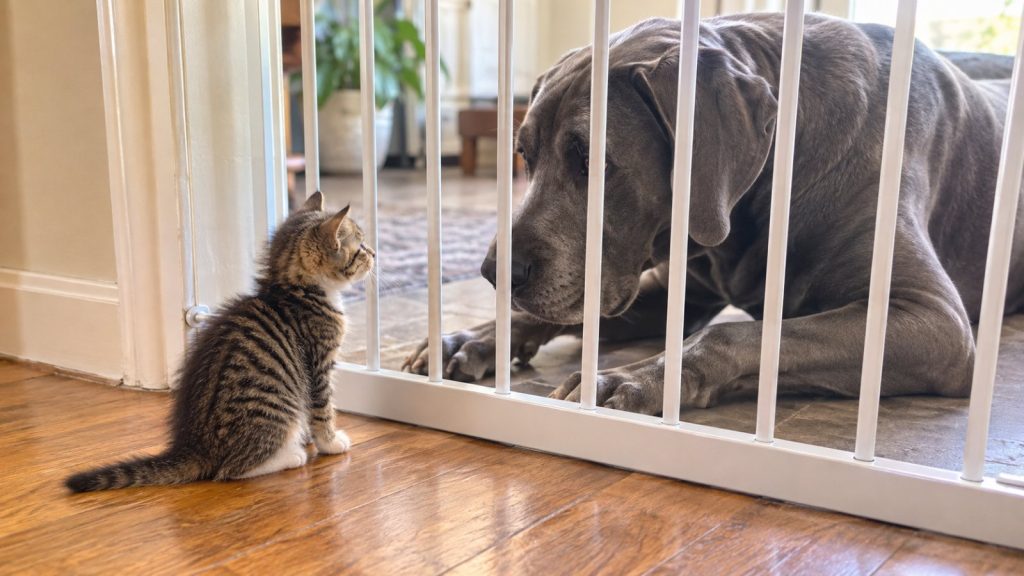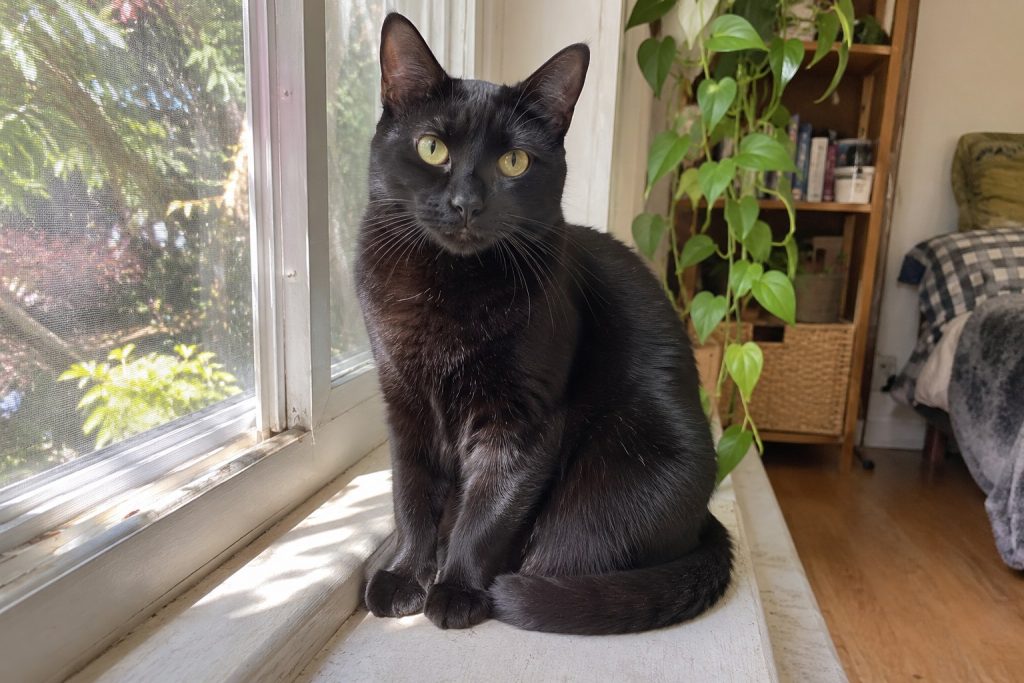
A black cat crosses the sidewalk in front of you. In one home, someone whispers “bad luck.” In another, someone smiles and takes it as a good sign. The cat just has somewhere to be, while people are still arguing over centuries-old black cat myths.
Those legends stick around so stubbornly that they often blur into bigger claims. Where did the superstition start, what actually creates a solid black coat, and are black cats really overlooked in shelters?
One coat, completely opposite folklore
For centuries, black cats have been cast as either villains or lucky charms depending on where you live. Cats Protection’s history of black cat folklore traces the scary reputation back to European witch trials, when simply keeping a cat could be used as suspicion against someone. That old fear never fully left pop culture, which is why black cats still show up beside witches on Halloween decorations.
Travel to other places, though, and the story flips completely. In Japan and parts of Britain, crossing paths with a black cat is considered good fortune. A Scottish tradition holds that a strange black cat showing up on your doorstep brings prosperity, and a folktale from southern France says treating a black cat kindly brings good luck. Even within England, whether a black cat brings good luck or bad can change from one county to the next.
Of course, if a friendly black cat wanders up to your porch today, they’re more likely a neighbor’s pet or a lost cat than a magic omen. Snapping a photo and checking for a microchip will do them far more good than making a wish.
The science behind the sleek black coat
There’s nothing mystical about how a black coat happens. It’s melanism, caused by high levels of eumelanin, the dark pigment behind black and brown fur. The UC Davis Veterinary Genetics Laboratory’s agouti guide explains that the agouti protein normally switches hair growth back and forth between dark and lighter pigment, creating striped tabby bands.
A landmark 2003 study of melanism in the cat family traced solid black coats in domestic cats to a tiny 2-base-pair deletion in the agouti gene (ASIP). When a cat inherits two copies of that recessive variant, the striping switch turns off, and each hair grows solid dark instead. Other genes still fine-tune the final shade, which is why coat color says plenty about DNA and nothing at all about bad luck.
Just like the myths people tell about orange cats, a cat’s fur color is a terrible crystal ball for personality.
Are black cats really adopted less?
You’ve probably heard that black cats sit in shelters longer than anyone else. When researchers actually check the numbers, the picture is much more mixed than the viral posts suggest.
In one Kentucky shelter, coat color did show a gap. A 2020 study of 7,983 cats at an urban public shelter found that 10.0% of black cats were adopted compared with 18.8% of white cats. Even there, the overall statistical link between color and outcome was weak, and black was also the most common color coming through the doors. Records alone couldn’t prove superstition was the cause.
In Washington, D.C., the gap practically vanished. A 2022 study of 11,126 cats found 75.5% of primarily black cats were adopted, nearly identical to the shelter’s 75.9% overall rate. Age, health, and behavior mattered far more than fur color.
Because black coats are genetically common, shelters often take in a lot of black cats and adopt out a lot of black cats at the same time. Seeing several waiting in cages doesn’t always mean nobody wants them.
If you’re visiting a shelter, look past the coat color altogether. Ask staff how each cat acts once the room quiets down, what toys make them light up, and how they react to a quiet visitor. Give them a minute to size you up, and you might even get a gentle slow blink back. That’s the only sign that really counts.
Sources
- Cats Protection, Black cat superstitions, Cats Protection Blog, 2014.
- UC Davis Veterinary Genetics Laboratory, Agouti, UC Davis School of Veterinary Medicine.
- Eduardo Eizirik et al., Molecular genetics and evolution of melanism in the cat family, Current Biology, 2003.
- Robert M. Carini et al., Coat Color and Cat Outcomes in an Urban U.S. Shelter, Animals, 2020.
- R. J. Kilgour and D. T. T. Flockhart, Direct and Indirect Factors Influencing Cat Outcomes at an Animal Shelter, Frontiers in Veterinary Science, 2022.