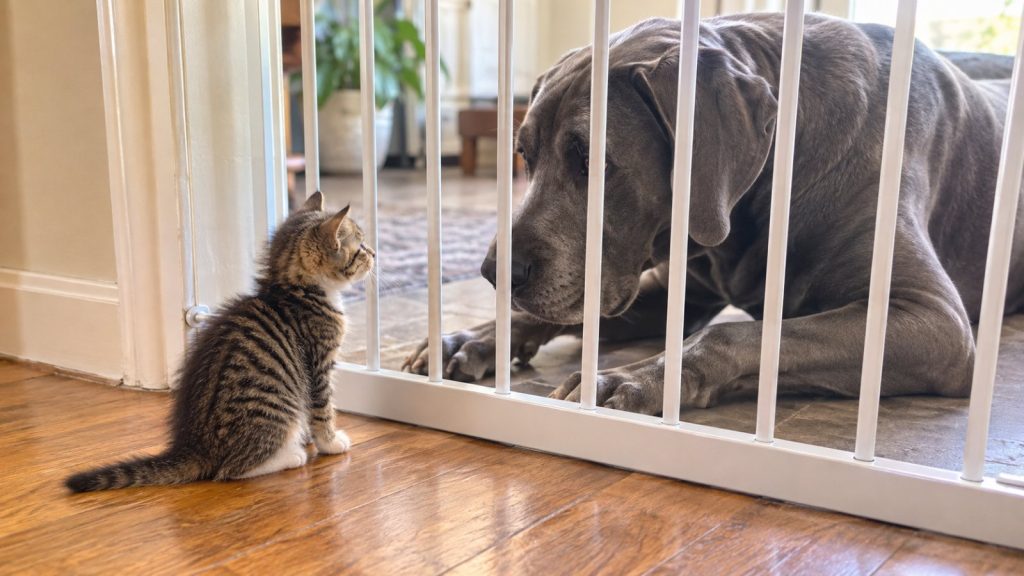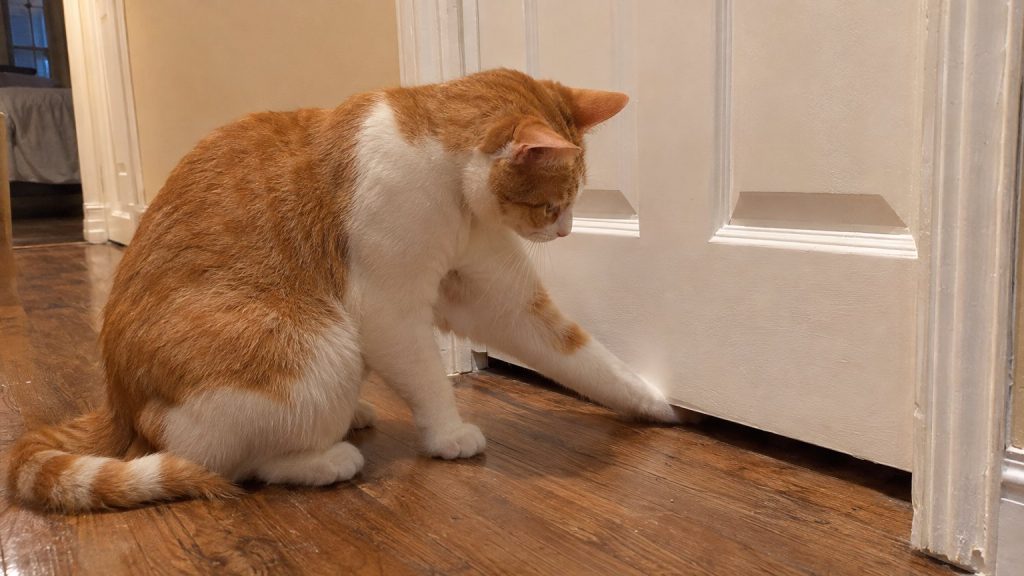
You close the bedroom door for five minutes. A paw appears under the gap. Then the scratching starts, then the meowing. You open the door, your cat glances inside, and walks away.
Is your cat messing with you? Veterinary behaviorist Dr. Lisa Radosta, who runs Florida Veterinary Behavior Service, answered with a joke when asked by Chewy. Anything is possible, she said, people have claimed to see the Loch Ness Monster, but the reality is that cats are very smart, and we don’t always know what they want. Here is what experts think is going on.
A Little Bit of FOMO
“It is a little bit of FOMO,” board-certified veterinary behaviorist Dr. Karen Sueda told Live Science. Your cat doesn’t know what is on the other side, and wants to go and find out.
Cats like to keep an eye on everything in their territory, and your home is their territory. In the wild, knowing what is around them helps keep them alive. A shut door is a blind spot.
The “Three Terrible C’s”
Cat behaviorist Jane Ehrlich sums it up with three things cats dislike. A closed door hits all of them at once:
- No choice. The cat can’t decide where to go.
- No control. Someone else decides for them.
- Change. A room that was open a minute ago is suddenly gone.
Your cat may not even want to go in. As Dr. Radosta puts it, a cat may be quite happy in a room, but not want to be stuck there all day. What they want is the option.
Cat behavior consultant Ingrid Johnson adds that cats don’t understand that a closed door is temporary. They only know that a spot where they felt safe, or liked to nap or eat, has been taken away. “When we control things for our cats, we create stress,” she said.
They Want to Be With You
Often you are the one behind the door, and that is the real problem. A 2017 study in the journal Behavioural Processes found that most cats chose time with a person over food or toys. A closed door cuts that off.
If your cat follows you to the bathroom, you already know how this feels.
You May Have Taught Them
Dr. Radosta admits she has done it herself. When her cat gets shut in a bedroom by accident and cries, she lets him out straight away. Even if that only happens now and then, it is enough to teach a cat that meowing at a door opens it.
How to Make Closed Doors Less Stressful
- Make a room your cat loves. Dr. Radosta suggests a “sanctuary space” with toys, a litter box, food and water. Spend time there, play there, and feed your cat there, so a closed door means comfort, not punishment.
- Go slowly. She recommends teaching cats to accept a closed door gradually, ideally from kittenhood or soon after adoption.
- Be consistent. Johnson says that if a room is off limits, it should be off limits all the time, not only when guests come over.
- Give them other hiding places. A simple box can help a cat feel safe without a whole room.
When It Is More Than FOMO
Most door drama is curiosity and wanting attention. But Dr. Sueda says frantic meowing, flattened ears and hissing mean a cat is truly upset. Dr. Radosta lists other signs of real stress: drooling, vomiting, diarrhea or panting. A sudden change in behavior is a reason to call your vet, or a veterinary behaviorist.
For everyone else, the answer to the door question is simple. Your cat doesn’t need to be in the room. They just need to know they could be.