Every cat parent has fallen for it at least once.
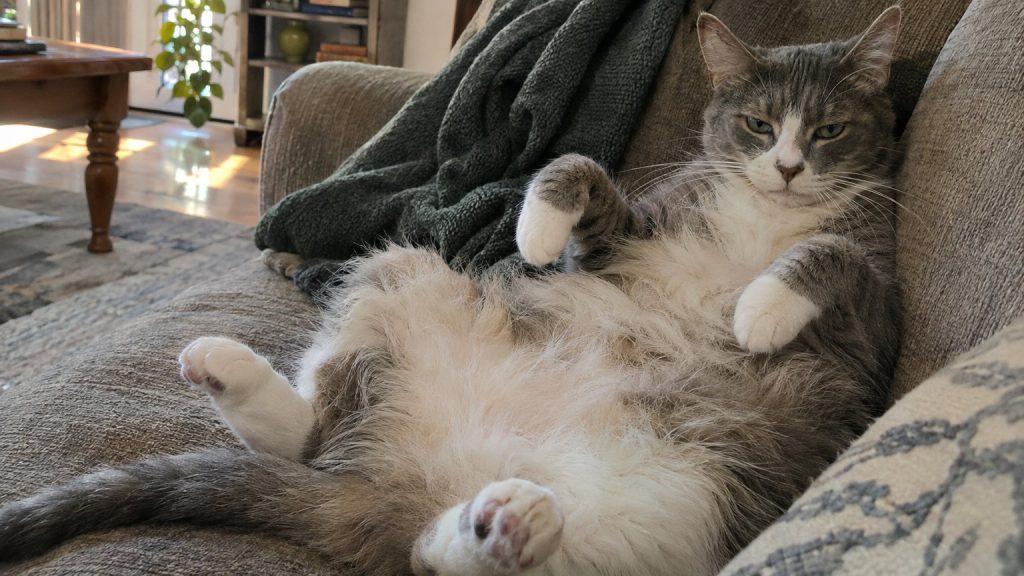
Your cat flops onto their back, paws curled, fluffy belly on full display. It looks like an invitation. You reach in for a rub, and suddenly four sets of claws and a mouthful of teeth are wrapped around your arm.
Cat people call it the belly trap. The good news is that your cat isn’t being two-faced. There is a simple reason most cats protect their belly, and once you know it, you can avoid the trap for good.
The Belly Is a Cat’s Weak Spot
“Cats are prey animals as well as predators,” Sarah Ellis, head of cat mental wellbeing and behavior at the charity International Cat Care, told Live Science. That means they can be very protective of the parts of the body most likely to be hurt in an attack, and the belly is at the top of the list.
Think about the anatomy. The heart and lungs sit safely behind the ribs. The liver, stomach and intestines don’t have that bony cage. Cats even have a loose flap of skin and fat on the belly, called the primordial pouch, which gives a little padding in a fight. Still, most cats feel threatened when a hand lands there.
Dogs have a similar body, but they rarely end up as prey. Cats can be chased by dogs, coyotes and even hawks and owls, so guarding the belly makes a lot of sense.
It Can Also Simply Feel Like Too Much
There may be a second reason. Lena Provoost, an animal behaviorist at the University of Pennsylvania School of Veterinary Medicine, told National Geographic that the hair follicles on the belly and tail are very sensitive to touch, so petting there can overstimulate a cat.
So a rub that feels gentle to you can feel intense to your cat, and the reaction comes fast.
Watch for the Warning Signs
Cats rarely go from relaxed to biting without warning. Mikel Delgado, a cat behaviorist and senior research scientist at Purdue University, says the early signs look like this:
- a quick head turn to look at your hand
- wiggling around a lot
- starting to move away from you
If those signs are ignored, Delgado says, they can escalate to biting, hissing or scratching. Stop at the first one and the trap never closes. The same idea explains the lick that turns into a bite.
Paws and Tail Are Often Off Limits Too
Many cats feel the same about their feet. Running away is a cat’s first survival plan and swatting is the second, so Ellis says they are predisposed to dislike having their paws held. Delgado adds that the paws are very sensitive, with toe pads and even small whiskers on the wrists.
The tail is another weak spot. When a cat is chased, the tail is the part closest to the chaser, and a bite at the base of the tail is a real risk.
Where Cats Actually Love to Be Petted
Stick to the base of the ears, the cheeks and under the chin. These areas are full of scent glands, and cats rub them on cats they are friends with. When you pet there, Delgado says, cats are treating you the way they treat other cats. Provoost gives the same advice.
It is also where petting does you good. Research suggests just ten minutes of petting can lower stress.
Some Cats Really Do Love a Belly Rub
Every rule has exceptions. “I’ve had a few who enjoyed belly rubs,” Delgado said. Ellis notes that when a cat welcomes touch on the belly, feet or tail, it can be a sign of a very close bond with that person.
Her advice for every cat is the same: take the cat’s lead, learn what your cat likes and dislikes, and respect it. If your cat rolls over and you are not sure, try a chin scratch first. Your arm will thank you.