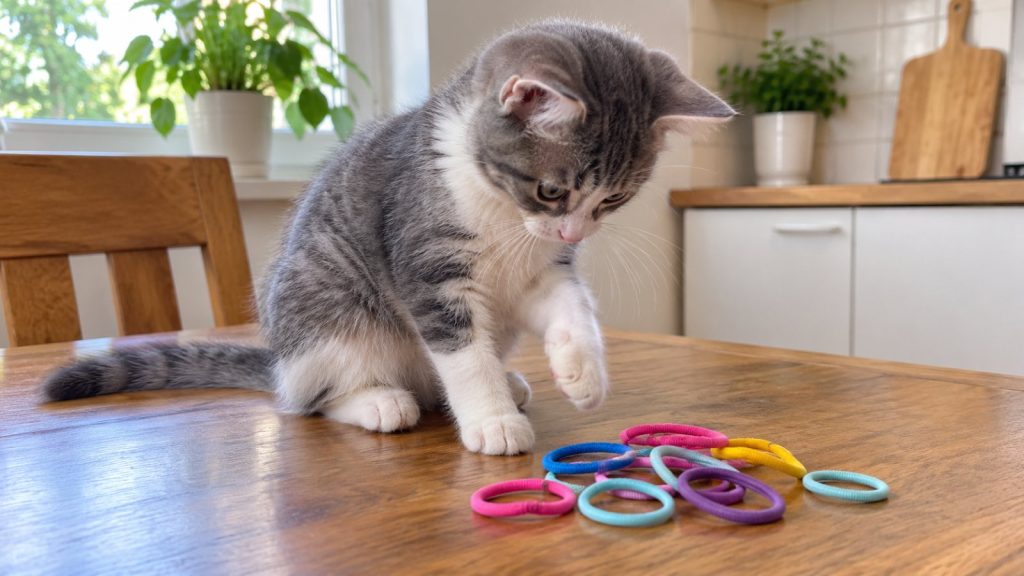
Image for illustration only, not Hope.
If your cat swallowed something they shouldn’t have, call your vet right away, even if your cat seems fine. Hair ties, string, and small bits of plastic can do serious harm inside a cat. These two true rescue stories show why it’s worth acting quickly.
Hope, The Kitten With 21 Hairbands
A five-month-old stray was found collapsed in a garden in the UK and carried in a cardboard box to the Cats Protection adoption centre in Birmingham. The team named her Hope.
She weighed just 1.59 kg, about what a kitten half her age would weigh, and she had no visible injuries. For a while nobody could work out what was wrong. Then an ultrasound found a mass in her intestines.
Hope was too weak for surgery at first. After five days of intensive nursing, she was strong enough, and vets removed 21 hairbands from her intestine. Nobody knows how she came to swallow them. The centre wondered whether someone had played with her using hairbands, or whether she had simply been very hungry.
When the charity shared her story, her organs were working well and the team was hopeful about a full recovery.
Lucia, Who Could Not Keep Food Down
In Australia, a cat named Lucia was found outside Sydney Dogs & Cats Home, badly underweight and unable to keep down food or water. She looked normal on the outside, but she had no appetite, so the vets kept looking.
Surgery found sticks and grass blocking her intestines. Without the operation, the team says, she would not have made it. She went on to recover in a foster home.
Warning Signs To Watch For
Some objects pass through without trouble, but others get stuck. According to Catster’s guide, watch for:
- Loss of appetite
- Vomiting
- A swollen or tense-looking belly, or signs of belly pain
- No stools
- Trouble breathing or panting
- Bleeding from the mouth or rear
- A change in behavior or energy
A cat can look normal at first, as Lucia did from the outside. If you know or suspect your cat swallowed something, don’t wait for symptoms.
What To Do First
- Call your vet or an emergency clinic right away. Treat it as an emergency.
- Don’t make your cat vomit, unless a vet tells you to. Some objects can do more damage on the way back up.
- Don’t pull on string or thread, even if you can see the end of it. PetMD warns against pulling a string in your cat’s mouth, and it can cause serious injury further down.
- Hold off on food and water until you have talked to a vet.
- Tell the vet what you think was swallowed, and when. Bring the packaging or a matching item if you have one.
Why String And Hair Ties Are So Dangerous
Vets call these “linear foreign bodies”. Long, thin things like thread, yarn, and hair ties can catch on the tongue while the rest moves through the gut. Catster describes them as the most dangerous type of swallowed object.
When It Keeps Happening: Pica
If your cat keeps chewing or eating things that aren’t food, it may be pica, an eating disorder in cats. PetMD lists causes from stress and boredom to medical problems like anemia. It’s not a behavior to punish. Ask your vet for a check-up to look for a medical reason first.
How To Keep Your Cat Safe
- Put away hair ties, ribbons, buttons, and thread. Cats Protection says never to leave a cat alone with anything they could swallow by mistake.
- Choose toys made for cats, and put string or wand toys away after play.
- Check risky spots, like the bottoms of curtains and the sides of sofas, for loose threads and wires.
- Give them plenty of play, because a bored cat may go looking for trouble.
Frequently Asked Questions
Can a cat pass a swallowed object on its own?
Sometimes, but you can’t tell from home which objects will get stuck, so call your vet.
How soon should I call the vet?
Right away, even if your cat seems well.
Is it safe to pull out a string I can see?
No. Leave it alone and get your cat to a vet.
This article is general information. It doesn’t replace advice from a vet who can examine your cat.